
This summer, our staff and board traveled to Missoula, MT for the 2nd Annual IndigiPalooza MT: Resistance 250+. Current grantee, Chickadee Community Services, organized the event, along with numerous volunteers, vendors, speakers, and sponsors like PF. The weekend brought together Indigenous voices, stories, art, learning, laughter, and connection. Indigipaloooza shared panel discussions and learnings on a vast breadth of topics, including Indigenous reporting and storytelling, Sovereignty through our Ancient Relationships, Indigenous Wellness and Joy, and so many others! What a line up, we were blown away! We left feeling inspired and grateful.
Want to see more from IndigiPalooza? Check out photos from the weekend and watch recordings of the conversations and panels.
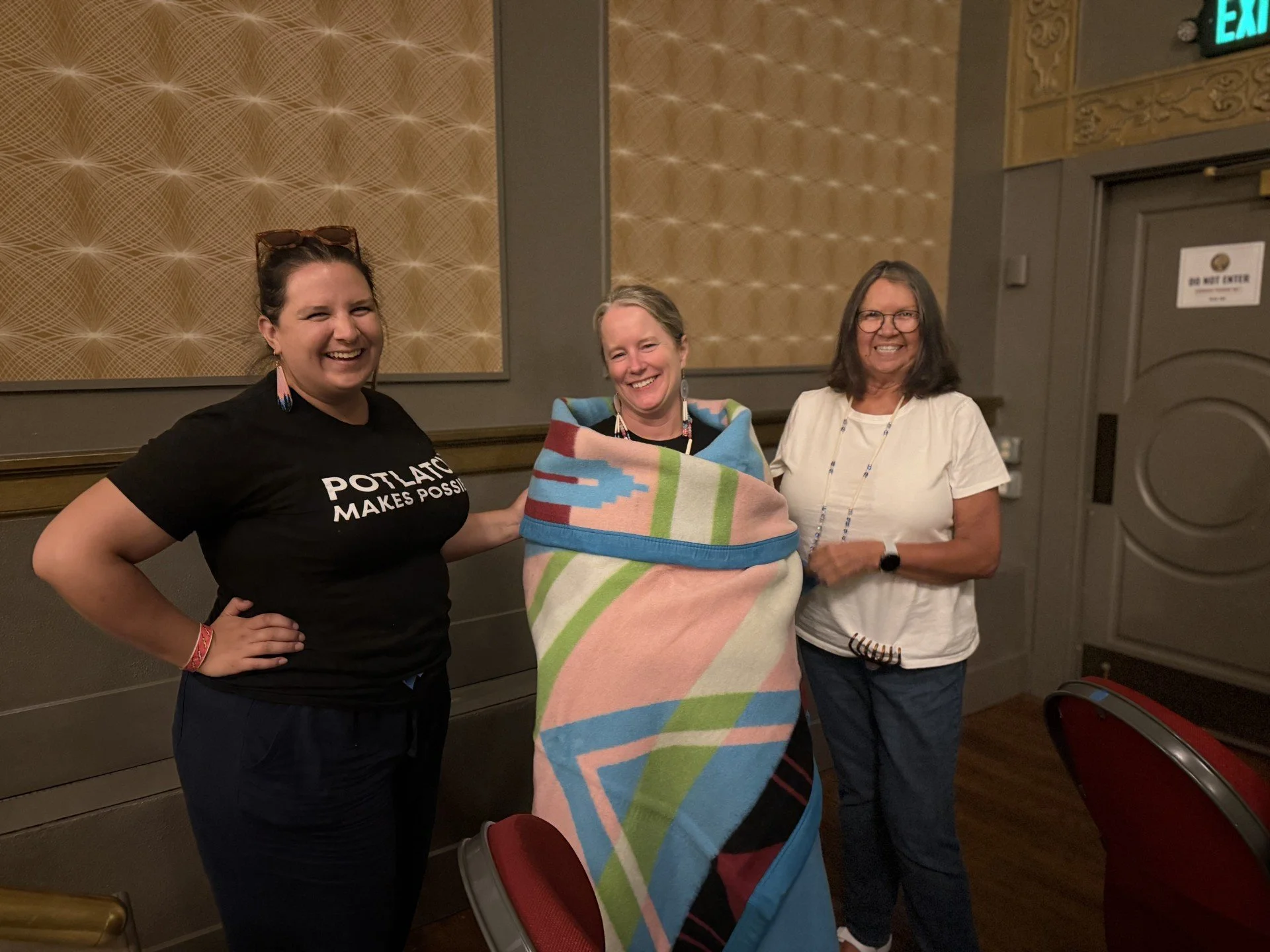
While in Montana, we had the gift of meeting with local grantees and partners. Instead of just hearing updates through emails and Zoom, we sat together, listened, learned, and got to know the people behind the work.
Spending time with the community reminded us of who we are.
We are multifaceted in our giving because Indian Country is multidimensional, complex, dynamic, and full of Indigenuity.
We saw this in so many ways.

Potlatch Staff with Friends of the Children in Western Montana’s Flathead Nation program: Nicole Callahan (Network Tribal Programs Director) and Darian DeLaurenti (Family Engagement Specialist)
At Friends of the Children in Western Montana’s Flathead Nation program, Nicole Callahan, Network Tribal Programs Director, and Darian DeLaurenti, Family Engagement Specialist, explained how long-term mentoring, family support, and culture all come together in their work with Native youth. We also visited the welcoming space where mentors meet with the kids, surrounded by their artwork and photos of everyone in the program. Nicole said culture is “not like a separate thing. It’s a core element of who we are.” Their programs include bitterroot digging with elders, culture camp, traditional games, regalia-making, and other ways for young people to connect with their culture and community.
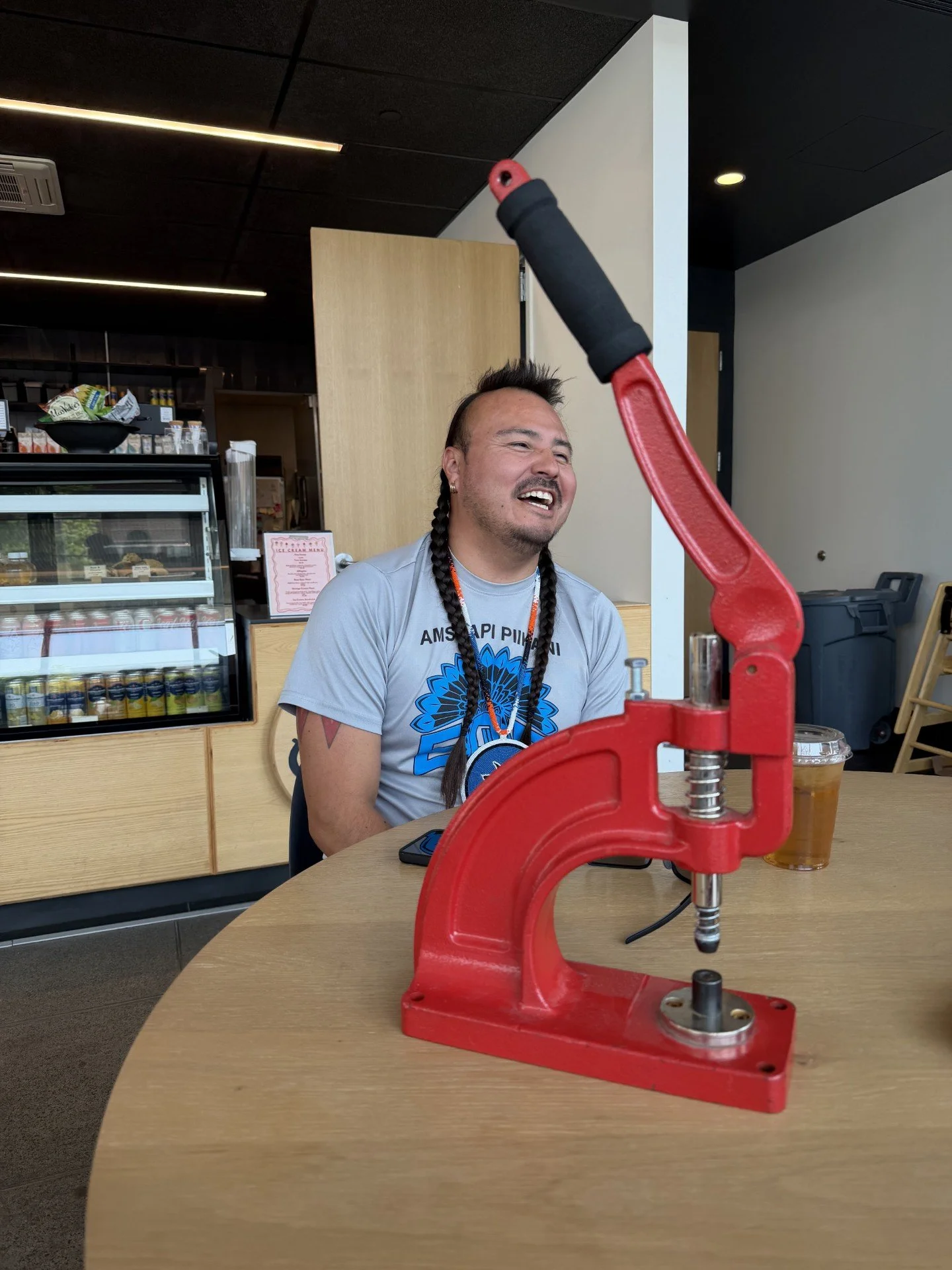
When we met artist and educator, Rodney First Strike, and he didn't just talk about his leatherwork. He brought tools and materials, showing us not only how to make our own bracelets but also his process, expertise, and commitment to carrying forward traditional artforms. This small moment showed how relationships grow when we learn and spend time together.
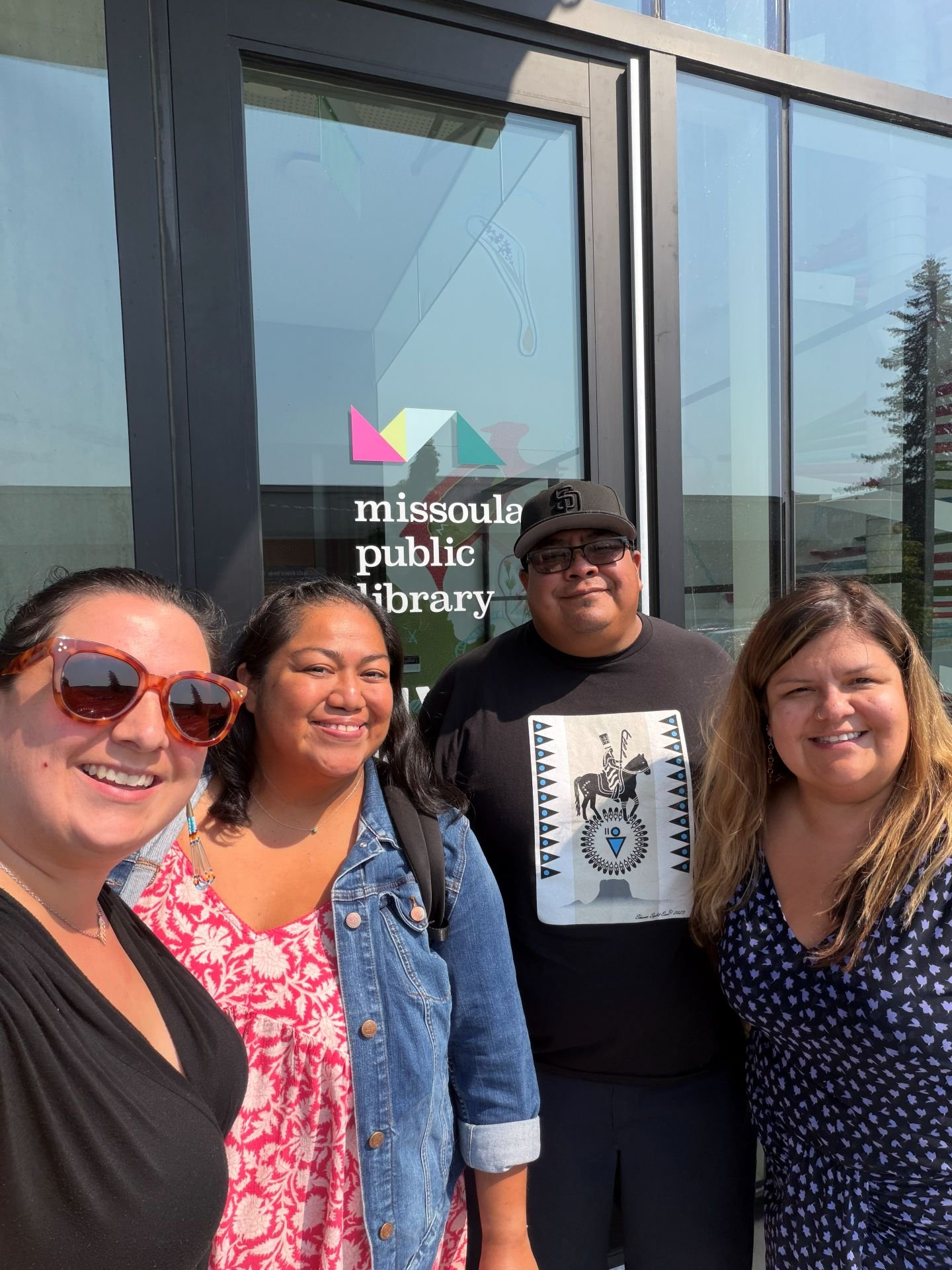
Raymond Kingfisher spoke with us about language and ceremony, and how important it is for future generations to have real access to both. His goal is to teach language and bring speakers into classrooms, creating more chances for people to gather, talk, and learn together. He also shared that he made about 100 pairs of moccasins before summer to give to young people, so they have what they need to participate in ceremony.
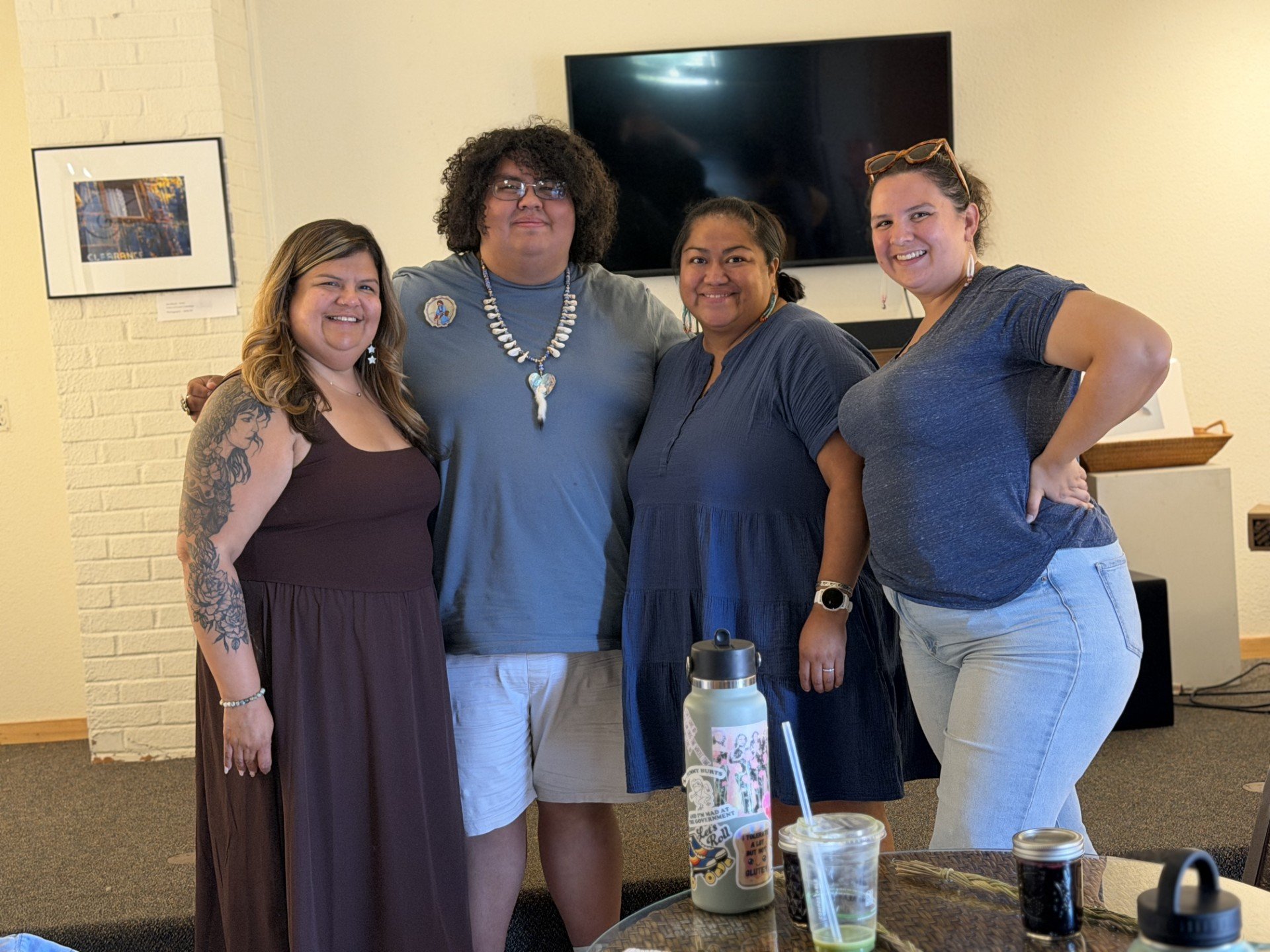
Clarence “CJ” Wright told us he has been “buying art back,” especially beadwork and beaded bags. He shared how these pieces carry family histories and recognizable family styles. In one case, a piece made its way back to the family who created it, and they wanted their children to have and know their family’s beadwork. CJ also has a bigger dream: a gallery in Missoula where Native artists are showcased together in a space that is “beautiful, like a piece of art.”

We also spent time with Lauren Small Rodriguez, Executive Director at Calling Our Spirits Forward, whose work brings together land, medicines, food sovereignty, cultural wellness, youth, families, and elders demonstrating what is possible when you reframe public health through the lens of Indigenous knowledge, healing, and belonging.
All of these efforts are different, but they are all connected.
They are acts of healing.
They are music and art.
They are language, ceremony, medicine, mentoring, food, regalia, cultural teaching, and creating spaces where people can gather and belong.
And reminded us of who we are.
While in Montana, we also met with High Stakes Foundation / Goodworks Ventures and the Women’s Foundation of Montana. We started building relationships with other organizations that care about the area, moving resources into the community, and finding ways to work together.
Montana reminded us that being out in the community and building relationships is integral to our work. This reminded us of who we are.
If you would like to learn more about the work of Potlatch Fund or donate to support work shared please visit: https://potlatchfund.networkforgood.com/projects/125208-donate-to-potlatch-fund-today
